

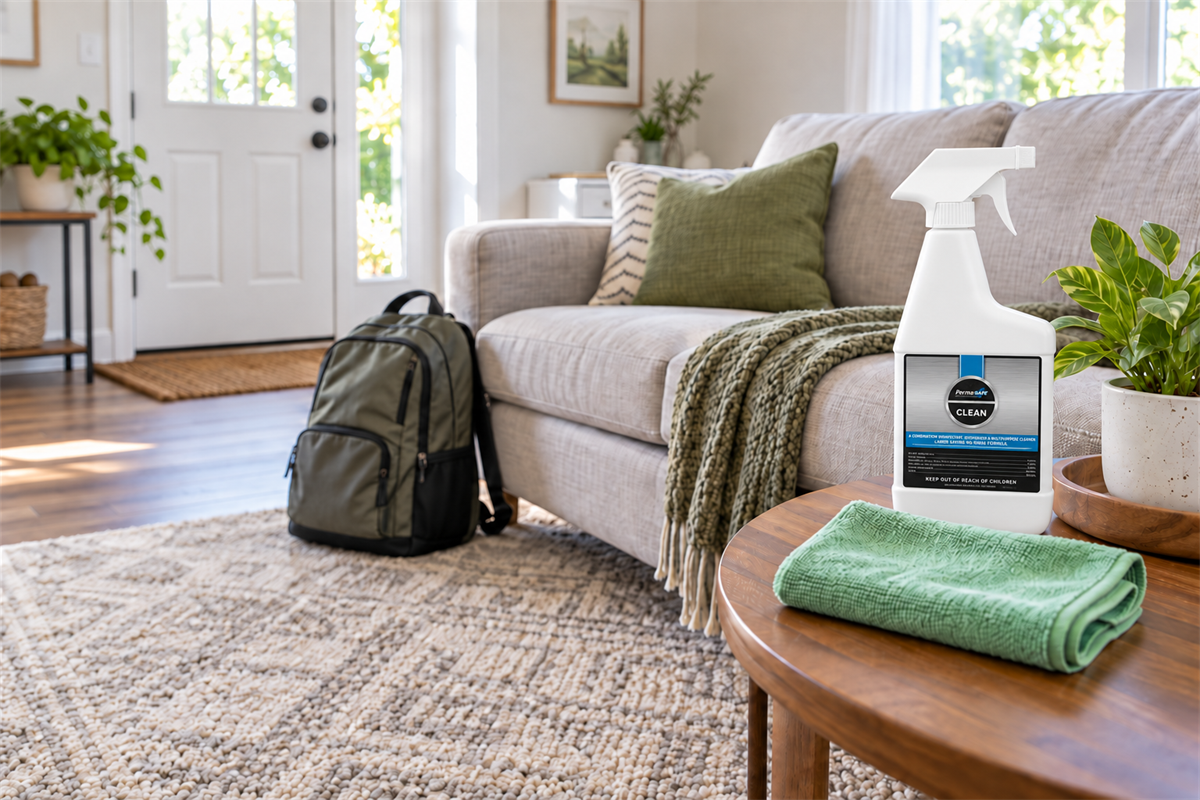
Soft surfaces are where everyday life lands: the couch after a long day, the backpack dropped by the door, the rug under the coffee table, the carpeted step that catches spills, dust, and crumbs. They are also the surfaces people are most likely to treat too aggressively.
Before treating a sofa, carpet, backpack, cushion, or upholstered item, identify the material, remove visible soil, spot test in a hidden area, control moisture, and follow the product directions for that surface.
That last point matters most. A product that is appropriate for one surface or use may not be appropriate for another.
Why Soft Surfaces Need a Different Approach
Read product labels and you will see that most disinfectant cleaners are only EPA registered, and approved for use on Hard, Nonporous Surfaces, such as stainless steel, plated metal fixtures, glazed porcelain, and sealed concrete, ceramics and laminates, which means their antimicrobial capabilities are largely limited to certain countertops, floors, and kitchen and bathroom fixtures. Such limitations exclude the surfaces that most of us are in contact with most often, those the EPA classifies as Soft Surfaces.
That is why the best soft-surface process starts before any product is sprayed. If you skip the preparation step, you can accidentally lock in residue, spread a stain, overwet padding, or create a drying problem. A careful process is not slower in the long run; it helps prevent avoidable damage.
Start by Identifying the Surface
Before treating anything, ask what it is made of and whether it has a care label. A removable cushion cover, school backpack, woven rug, synthetic carpet, decorative pillow, and upholstered dining chair can all respond differently to moisture and cleaning products.
Look for:
· A fabric care tag or manufacturer cleaning code.
· Instructions for water-based cleaning, dry cleaning, machine washing, or spot cleaning.
· Warnings about bleach, solvents, heat, soaking, or tumble drying.
· Mixed materials such as leather trim, metal hardware, adhesive backing, foam padding, or cardboard stiffeners.
If you cannot identify the material, be more cautious. Use a small hidden test area before treating a visible section.
Remove Dirt Before You Treat
Sanitizing or disinfecting should not be treated as a shortcut around basic cleaning. Crumbs, dust, pet hair, grease, body oils, food residue, and sticky spills can sit between the product and the surface you are trying to treat.
For soft materials, start with dry soil removal whenever possible. Vacuum upholstery and carpet. Shake out or brush off backpacks. Blot fresh spills instead of rubbing them deeper into the fibers. If a washable item can be laundered according to its care instructions, that may be the simpler first step.
Once visible soil is handled, you can decide whether the surface is eligible for the product and use pattern you have in mind.
Spot Test Before Treating the Whole Surface
A spot test is one of the easiest ways to avoid regret. Choose a small, hidden area such as the underside of a cushion, the back corner of a rug, or an inside seam on a backpack. Apply according to the product directions, then let the test area dry fully.
Check for color change, staining, texture change, water rings, stiffness, or residue. If the test area looks or feels wrong, do not continue on the visible surface.
Control Moisture
Soft surfaces can hide moisture below the visible top layer. A fabric face may look only slightly damp while the cushion, pad, backing, or seam underneath holds much more liquid. That is why oversaturation is one of the biggest soft-surface mistakes.
Use the amount and application method specified by the product directions. Do not assume that more liquid means a better result. More liquid can mean longer drying, water rings, odor, material distortion, or damage to backing and adhesives.
After treatment, give the surface enough time to dry completely before regular use. Increase airflow when appropriate for the material and setting.
How to Think About Common Soft Surfaces
|
Surface |
What to Check |
Practical Caution |
|
Sofa or upholstered chair |
Fabric code, cushion construction, hidden test area |
Avoid soaking cushions or seams; let the test area dry first |
|
Carpet or rug |
Fiber, backing, dyes, stain history |
Blot and vacuum first; watch for water rings or backing issues |
|
Backpack or soft bag |
Care tag, coatings, zippers, straps, foam panels |
Check whether the item is washable or spot-clean only |
|
Throw pillow or cushion cover |
Removable cover, fill material, washing instructions |
Treat the cover and fill as separate concerns |
Where PermaSafe CLEAN Fits
Unlike other disinfectants CLEAN is EPA registered, and proven to safely and effectively eliminate harmful bacteria on Hard, Soft, and Food Contact Surfaces, making it the ideal sanitization solution for practically every inch of every residential, commercial, institutional and industrial space, as well as every item and surface in them. See CLEAN's Directions for Use for more details.
A Simple Room by Room Plan
If you are doing a practical home reset, work by category instead of spraying every soft item at once. Start with the items people touch or use most often: the main sofa cushions, the entry rug, backpacks, car seats, fabric dining chairs, or the carpeted area where shoes and bags land.
This keeps the job manageable and makes drying easier to monitor. Treating one area at a time also helps you notice whether a material reacts poorly, whether a stain needs separate attention, or whether the item should be washed instead of treated in place.
For larger soft surfaces, divide the job into sections. Finish one cushion, rug section, or backpack panel before moving to the next. The goal is even, controlled work, not speed for its own sake.
A Soft Surface Checklist
· Identify the material.
· Read the care label or manufacturer instructions.
· Remove visible soil before treatment.
· Spot test in a hidden area.
· Use only eligible products and application methods.
· Avoid oversaturation.
· Allow the surface to dry fully.
· Stop if you see discoloration, texture change, residue, or damage.
Frequently Asked Questions
Can you disinfect a couch?
Maybe, depending on the material and the product directions. Check the care label, remove visible soil, spot test first, and use only products whose directions support that surface.
Can you disinfect carpet?
Some carpet or rug situations may be eligible for treatment depending on the product and directions. Always check surface compatibility, avoid oversaturation, and let the area dry fully.
Can you disinfect a backpack?
Start with the backpack care label. Some backpacks can be washed, some can only be spot cleaned, and some include coatings, foam panels, or hardware that need extra caution.
Should I spray more product to get a better result?
Do not assume more is better. Use the amount and method required by the product directions. Too much moisture can create new problems on soft materials.
What should I do if I am unsure?
Pause and verify the surface and product directions before treating the item. If the material is valuable, delicate, or unknown, test first or consult the manufacturer.
The Bottom Line
Soft surfaces can be part of a cleaner home, but they ask for a little more patience. A couch, carpet, or backpack is not a countertop, and treating it like one can create avoidable problems.
Start with the material, remove visible soil, test first, control moisture, and follow current product directions. PermaSafe CLEAN is appropriate for most eligible surfaces and use cases, and it should fit very well into that careful process.


Leave a comment
All comments are moderated before being published.
This site is protected by hCaptcha and the hCaptcha Privacy Policy and Terms of Service apply.