

Summer is hard on an air-conditioning system. For months, the system pulls warm indoor air through the return, pushes cooled air back through the house, manages moisture, and traps dust in the filter. By the time cooler weather arrives, the A/C may not be running as often, but that does not mean it should be ignored until next spring.
The best time to prepare your HVAC system for fall is right after the heaviest cooling season ends. You do not need to turn it into a major project. Start with the basics: replace or inspect the filter, check the returns and vents, look for moisture issues, pay attention to musty odors, and decide whether anything needs a professional HVAC visit before heating season begins.
Here is the plain-English version: if your system looks clean, drains properly, moves air normally, and does not smell unusual, you are probably in good shape for the seasonal changeover. If you notice weak airflow, water where it should not be, a persistent musty smell, visible debris, or signs of microbial growth, slow down and investigate before you simply switch modes and move on.
Start With the Filter
The filter is the easiest place to begin because it tells you a lot about what the system has been handling all summer.
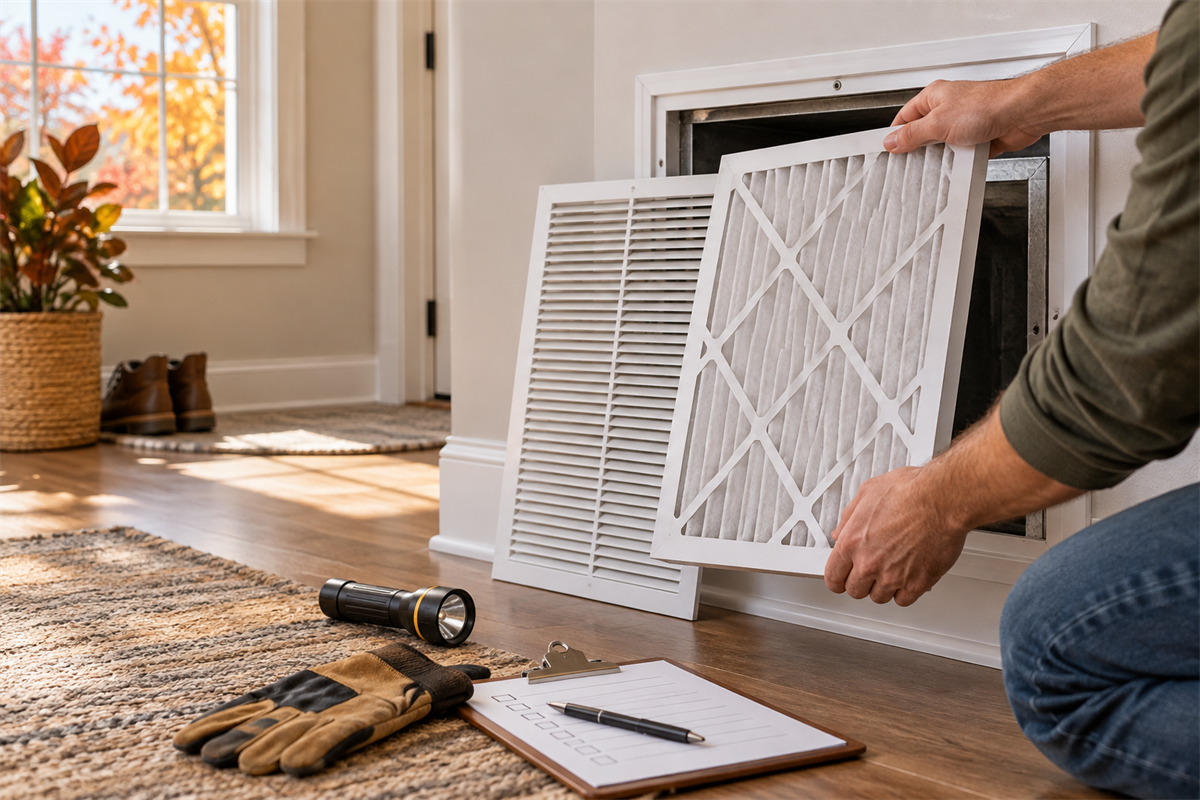
Turn the system off, remove the filter, and look at it in good light. A filter that is gray, loaded with dust, bent, damp, or past its recommended replacement interval should be replaced. Make sure the new filter is installed with the airflow arrow pointing the correct direction. That arrow usually points toward the blower or air handler, not back into the room.
Look around the filter slot or return grille. If you see heavy dust buildup, loose insulation, gaps around the filter, or a filter that does not fit snugly, the system may be pulling air around the filter instead of through it.
For homeowners, the goal is simple: install the right size filter and replace it on a schedule that fits your home. Homes with pets, renovations, heavy summer use, or lots of dust may need more frequent checks.
Check Returns and Supply Vents
After the filter, walk the house and look at the return grilles and supply registers.
Return grilles should be open, reasonably clean, and not blocked by furniture, curtains, storage bins, or rugs. Supply vents should also be open and unobstructed unless an HVAC professional has advised otherwise. Closing vents in unused rooms can sometimes create pressure and airflow issues, especially in systems that were not designed for that pattern.
Listen while the fan runs. You are not trying to diagnose the whole system from one sound, but obvious changes matter. Rattling, whistling, buzzing, or a return grille that seems to pull much harder than usual may be worth a closer look. If airflow feels weaker than it did earlier in the summer, check the filter first, then consider whether the system needs service.
Dust streaks around vents can also be a clue. Heavy staining, damp-looking areas, or debris coming from a register deserves more attention before the system shifts from cooling season to heating season.
Look for Moisture Around the System
Air conditioners do more than cool air. They also remove moisture from indoor air, which is why condensate pans, drain lines, and nearby areas matter.
If your indoor unit or air handler is accessible, look for standing water, stains, rust, wet insulation, or a clogged-looking drain area. Check the floor near the unit. If there is a condensate pump, make sure the area around it is dry and clean. If you are not sure what you are looking at, do not take the system apart. A visual check is still useful because it can tell you when to call a professional.
Moisture problems should be handled early. A drain issue that seems small at the end of summer can become a bigger nuisance if the system sits dirty or damp for months. Persistent moisture can also contribute to odors, especially in dark, enclosed, hard-to-reach areas.
Window and wall A/C units deserve the same kind of attention. Remove and clean or replace the filter according to the unit's manual. Check that the unit drains properly. If a window unit is meant to tilt slightly outward, confirm that it has not shifted during the season. If water is pooling where it should not, correct that before storage or continued use.
Take Musty Odors Seriously, But Do Not Guess
A musty smell when the A/C turns on is one of the most common reasons people start thinking about HVAC cleaning. It is also one of the easiest problems to oversimplify.
An odor can come from many places: a dirty filter, dust in returns, a damp drain pan, a clogged drain line, debris on accessible components, nearby building materials, a humid room, or odor sources that are not inside the HVAC system at all. That is why a good fall check starts with observation before product selection.
Ask a few practical questions:
- Does the smell happen only when the system starts?
- Is it strongest near one vent, or throughout the home?
- Did it begin after heavy humidity, a leak, construction, a dirty humidifier, or a long period of A/C use?
- Does replacing the filter help?
- Is there any visible moisture or debris near the air handler, return, drain, or window unit?
If the odor is mild and the system otherwise looks normal, a filter change and basic cleaning around returns and vents may be enough to start. If the odor is strong, persistent, or connected to visible growth, water damage, or health concerns, bring in a qualified HVAC professional or appropriate remediation expert. The right fix depends on the source.
Clean the Area Around the System
Fall HVAC preparation is also housekeeping. Keep the area around the indoor unit clear. Do not stack boxes, chemicals, paint cans, pet supplies, or seasonal decorations against the equipment. Make sure the return area is easy to access so filter changes actually happen.
Vacuum dust from return grilles and accessible vent covers. Wipe nearby surfaces as appropriate for the material. If you remove vent covers, keep track of screws and make sure everything is dry before putting parts back in place. Avoid spraying liquids into electrical components, controls, motors, or areas where the product directions do not allow use.
For outdoor equipment, clear leaves, grass clippings, and debris from around the condenser. Do not pack patio furniture, leaf bags, or storage items against the unit. If the unit needs a deeper cleaning, repair, or coil service, schedule a professional visit.
Where PermaSafe Fits
PermaSafe's HVAC hygiene solutions may be relevant when you are dealing with HVAC odor, ductwork, filters, condensate areas, or other system-specific hygiene concerns. The important step is to match the product to the actual problem and follow the current directions for that product and application area.
PermaSafe HVAC Solutions products: https://permasafe.com/pages/hvac
Do not assume that every HVAC product is used the same way, and do not assume that every HVAC system is identical. A central forced-air system, window A/C, wall unit, mini-split, furnace, and air handler can all create different access and application questions. Before using any treatment, review the current PermaSafe HVAC resources and the product directions for the exact item you plan to use.
If your situation involves visible growth, recurring moisture, unusual symptoms, a strong persistent odor, or a system you cannot safely access, treat that as a service issue first. Products work best as part of a correct process, not as a substitute for finding the source of the problem.
Fall HVAC Checklist
Use this as a quick end-of-summer reset:
- Replace or inspect the HVAC filter.
- Confirm the filter fits snugly and faces the right airflow direction.
- Vacuum dust from return grilles and accessible vent covers.
- Make sure returns and vents are open and unobstructed.
- Run the fan and listen for unusual rattling, buzzing, or whistling.
- Check accessible areas near the indoor unit for standing water, stains, or dampness.
- Look at the condensate pan, drain line area, or condensate pump if accessible.
- Clear leaves and debris from around the outdoor unit.
- Note any musty odor, when it happens, and where it seems strongest.
- Review PermaSafe HVAC directions before using any HVAC hygiene product.
- Call an HVAC professional if you see water problems, visible growth, weak airflow, or recurring odors you cannot trace.
FAQ
Should I replace my HVAC filter before fall?
Yes, it is a good seasonal habit to inspect the filter after heavy summer A/C use. Replace it if it is dirty, damaged, damp, or past the recommended interval for that filter and system.
Why does my A/C smell musty after summer?
A musty odor can come from several sources, including dust, moisture, a clogged drain, damp components, or odor sources outside the HVAC system. Start with the filter, returns, vents, and accessible moisture-prone areas. If the smell persists, have the system checked.
Should I spray something into my HVAC system?
Only use a product in an HVAC system if the current product directions support that application. Follow the exact directions for the product, system area, and applicator. When in doubt, review the PermaSafe HVAC resources or ask a qualified HVAC professional.
Can I prepare my HVAC system myself?
Many fall-readiness steps are simple: replacing the filter, clearing blocked vents, vacuuming grilles, and checking for obvious moisture or odor issues. Anything involving electrical components, internal coils, duct access, persistent water, visible growth, or uncertain product application should be handled carefully and may require a professional.
The Bottom Line
Preparing your HVAC system for fall is mostly about catching small issues before they become seasonal headaches. Replace the filter, check airflow, look for moisture, pay attention to odors, and use HVAC hygiene products only when they fit the situation and the current directions.
Summer may be over, but your HVAC system is not off duty. A simple fall check can make the next few months cleaner, easier, and less surprising.


Leave a comment
All comments are moderated before being published.
This site is protected by hCaptcha and the hCaptcha Privacy Policy and Terms of Service apply.