
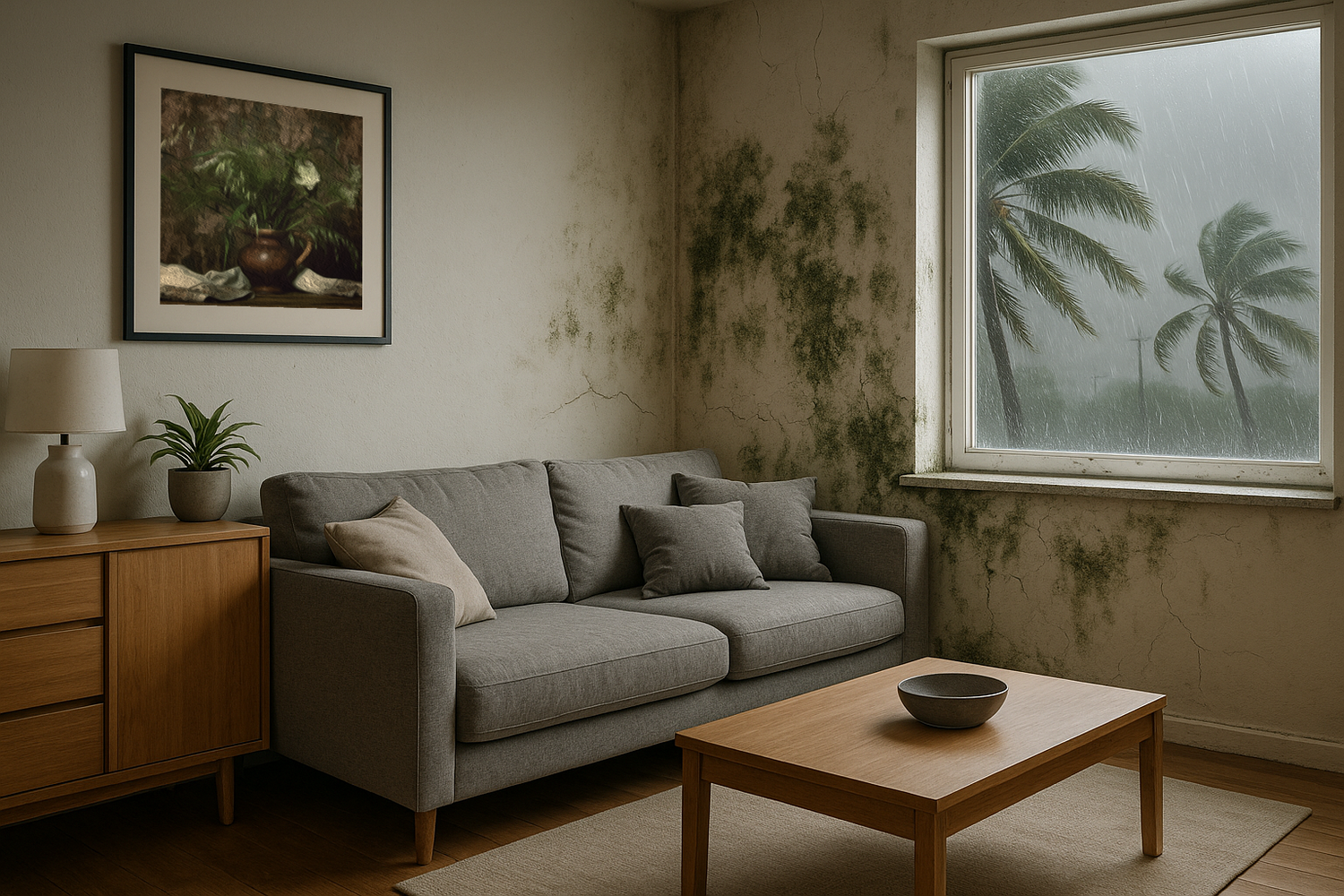
When a major storm hits, whether it’s a hurricane, tropical storm or flood, the visible damage can be overwhelming. Fallen trees, water-soaked furniture, and debris scattered everywhere often take center stage. But some of the most serious threats are the ones you can’t always see right away.
One of the most dangerous and costly issues that arises after a storm is mold. Left unchecked, mold can begin growing in as little as 24 hours after water damage occurs. And once it sets in, it can jeopardize both your home and your health. The good news is that with the right tools and approach, mold doesn’t have to take hold.
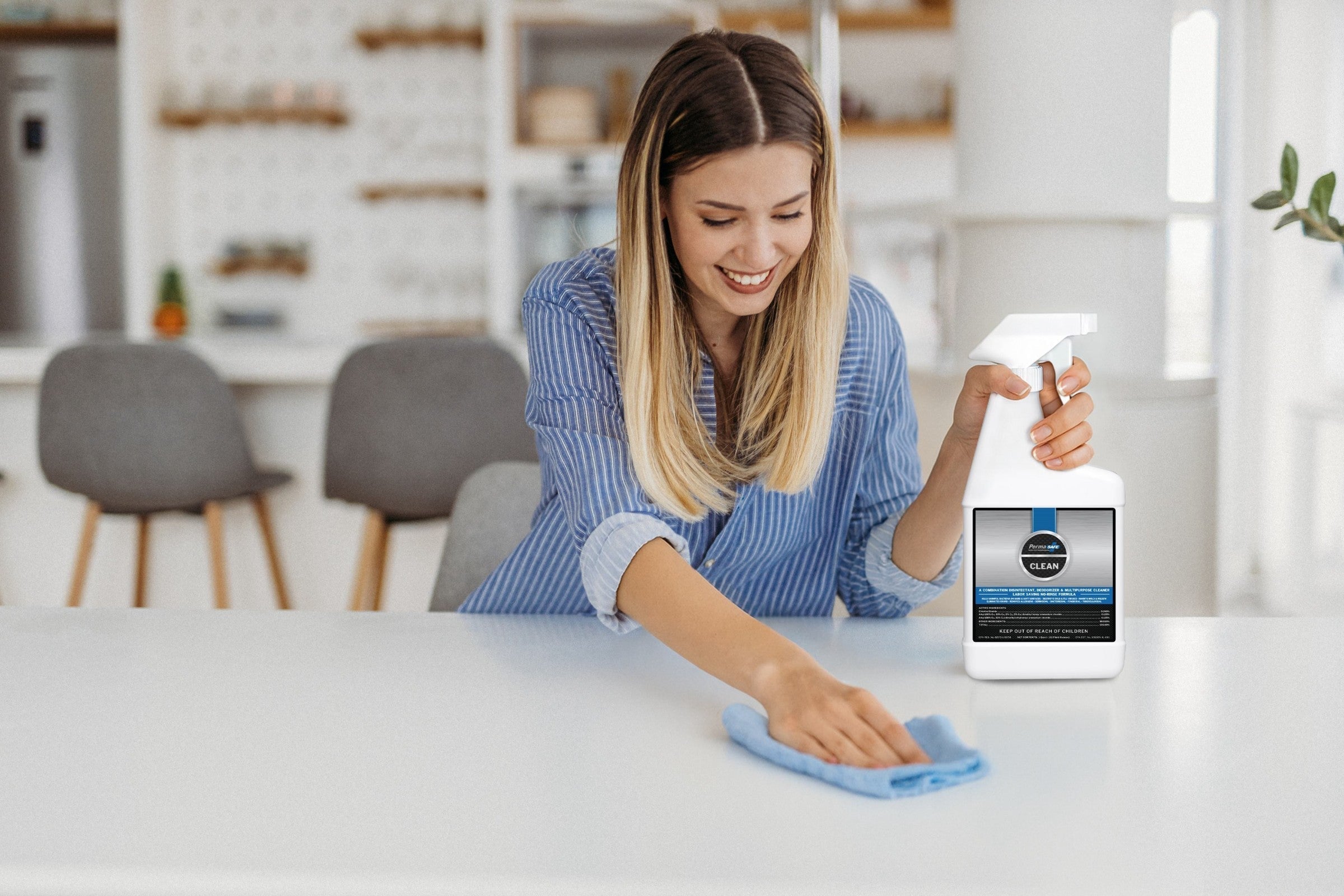
PermaSafe CLEAN is an EPA-Registered, NSF Certified, CDC Compliant, multi-purpose cleaner, advanced-level disinfectant, all-surface sanitizer, and a powerful mold, mildew, and fungi eliminator and regrowth preventer.
This post will walk you through how to approach mold cleanup after a storm, and explain why PermaSafe CLEAN is the right tool for the job.
Why Mold Growth is So Common After Storms
Mold spores are all around us, indoors and out. Under normal circumstances, they float harmlessly through the air. But when a major storm causes water intrusion or flooding, the resulting moisture creates ideal breeding conditions for mold growth.
When combined with the warm temperatures often found in post-storm environments, especially in regions of high humidity, mold can begin to colonize on drywall, wood, carpet, insulation, upholstery, and other porous materials within just one day.
Once Mold Takes Hold, it Can:
- Cause severe property damage
- Create lingering foul and musty odors
- Trigger allergic reactions, asthma, and respiratory issues
- Complicate recovery efforts and drive up remediation costs
This is why mold control and prevention should be treated as a top priority, not just after water has been removed, but as an essential part of the cleaning and disinfecting process.
HOW TO GET STARTED
STEP ONE: Remove Standing Water and Thoroughly Dry the Affected Area
Before you reach for any disinfectants or mold control products, the first step in any storm cleanup effort is to remove standing water and dry out the affected areas as quickly as possible. Use wet vacuums, fans, dehumidifiers, and open windows to promote air flow. Remove any items that are too damaged to thoroughly clean, especially porous materials like soaked mattresses, carpets, rugs, or drywall that may harbor mold deep inside. The sooner you can dry the space, the better your odds of stopping mold in its tracks.
STEP TWO: Clean and Disinfect Surfaces Thoroughly
Once you’ve addressed moisture and water intrusion, it’s time to start deep cleaning and disinfecting. This is where PermaSafe CLEAN excels. Unlike basic cleaners that remove dirt but leave microbes behind, PermaSafe CLEAN is an EPA-registered disinfectant, fungicide, and mildewstat that’s specifically designed to kill and control mold, mildew, bacteria, and odor-causing microbes.
When Used as Directed, PermaSafe CLEAN:
- Kills mold and mildew at their source
- Inhibits mold regrowth for up to 30 days
- Eliminates odor-causing bacteria
- Is non-corrosive and safe for use on most water-safe surfaces
Because of its unique triple active ingredient formulation, it not only disinfects but also cleans, sanitizes, deodorizes, removes allergens, and controls mold - all in a single step. Such functionality makes it especially effective for storm recovery efforts, where time, efficiency, and reliability are critical.
HOW TO USE PERMASAFE CLEAN FOR POST-STORM & MOLD CLEANUP
When Tackling Mold-Affected Areas with PermaSafe CLEAN, Follow these General Guidelines:
1. Clean visible dirt and debris first.
Use soap and water, or just PermaSafe CLEAN to remove soils, mud, sludge, and organic matter. CLEAN is formulated to be a powerful multi-surface cleaner, in addition to an advanced-level disinfectant, all-surface sanitizer, and mold, mildew, and fungi eliminator and regrowth preventer.
2. Apply PermaSafe CLEAN generously to hard, non-porous surfaces.
Use a sprayer, cloth, sponge, or mop to apply it liberally. Allow it to remain visibly wet on the surface for at least 10 minutes to effectively eliminate fungal organisms such as Trichophyton Interdigitale, and to inhibit mold regrowth.
3. For soft surfaces like carpet, rugs, and upholstery, use the spot cleaning method.
Spray the affected area until saturated and allow it to air dry. Do not rinse.
4. Do not mix with other cleaners.
Always use PermaSafe CLEAN as directed and never combine it with bleach or other chemical products.
5. Repeat as necessary.
Mold-prone areas may benefit from routine applications, especially if moisture control is still an issue.
BEYOND THE CLEAN-UP: Preventing Mold From Returning
Once surfaces have been cleaned and disinfected, long-term mold prevention depends on moisture control and routine sanitation.
Key Prevention Tips:
- Keep humidity levels below 50% with a dehumidifier
- Repair leaks in roofs, windows, and plumbing quickly
- Use mold-resistant drywall and insulation where possible
- Clean bathrooms and damp areas regularly with a mildewstat like PermaSafe CLEAN
- Apply PermaSafe CLEAN to HVAC coils and ductwork to stop mold where it often hides*
*Yes, PermaSafe CLEAN is even EPA registered and approved for microbial control in HVAC systems. When fogged or sprayed into ductwork and air handlers, it helps eliminate and prevent mold and bacteria growth that can impact indoor air quality.
WHAT MAKES PERMASAFE CLEAN A BETTER CHOICE?
There are plenty of mold control products on the market, but not all are also EPA-registered Broad-Spectrum Disinfectants, and even fewer offer the multi-functionality and safety profile that PermaSafe CLEAN delivers.
Here’s Why CLEAN is a Superior Solution for Mold Control, Especially After a Storm:
- EPA Registered for use as a fungicide, mildewstat, disinfectant, all surface cleaner and more
- Non-corrosive, non-staining, and gentle on surfaces
- No rinse required on food-contact surfaces
- No harsh fumes, added fragrances, or VOCs
- Approved for use on soft, hard, and even food contact surfaces, and in HVAC systems
- Inhibits mold regrowth for extended periods
- Safe for homes, schools, healthcare settings, and commercial use
- It’s one of the very few products that meets the CDC’s criteria of an Ideal Disinfectant Cleaner
Mold Doesn’t Wait. And You Shouldn’t Either
Storm recovery is never easy. It takes time, planning, and the right tools. But one of the best things you can do to protect your home, your health, and your family is to take mold seriously, and stop it before it spreads. PermaSafe CLEAN gives you the power to do that quickly, safely, and effectively. It’s not just a cleaner. It’s a comprehensive mold-fighting solution that combines the cleaning performance you need with the safety and simplicity you want.
Ready to Reclaim Your Space?
Visit www.PermaSafe.com to learn more about how PermaSafe CLEAN can support your storm recovery and mold prevention efforts. Whether you’re managing a home cleanup, a business recovery, or a professional restoration project, PermaSafe CLEAN is the trusted, EPA-approved choice for mold control that works.
IMPORTANT MOLD SAFETY TIP: When entering and cleaning a space where there is flood damage and mold, it is essential to wear respirator masks, rubber or insulated footwear, heavy-duty work gloves, and safety goggles. Those who suffer from respiratory issues or a weakened immune system should avoid entering the space entirely. If the mold problem is severe, it’s a good idea to seek the help of a professional who is trained in mold cleanup. Always err on the side of caution when it comes to severe flood damage or major mold issues.


Leave a comment
All comments are moderated before being published.
This site is protected by hCaptcha and the hCaptcha Privacy Policy and Terms of Service apply.